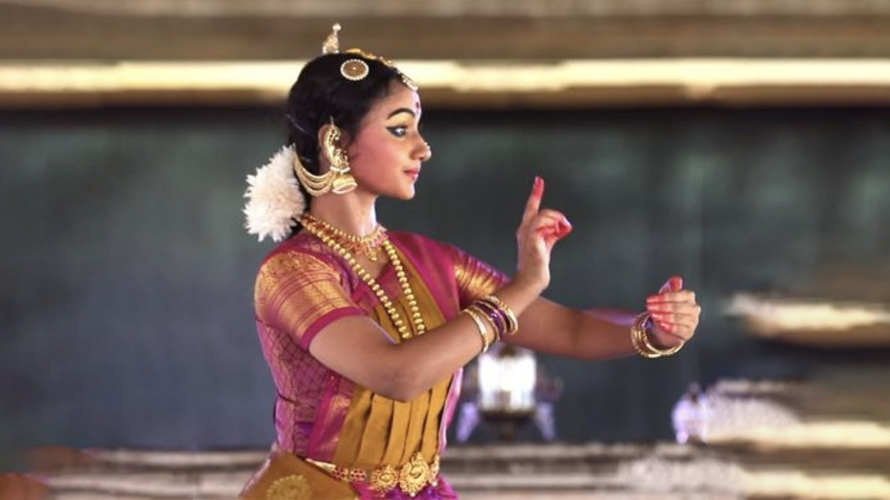
How Do Dancers Perform Intricate Footwork on a Brass Plate Without Losing Balance?
Watching a dancer execute lightning-fast footwork on a smooth brass plate feels almost unreal. Every step looks precise, controlled and effortless, even though the surface beneath is metal and seemingly slippery. This unique performance skill is not built on luck or instinct, it is the result of years of disciplined training, deep body awareness and a refined understanding of balance, rhythm and movement control. Behind the visual beauty lies a fascinating blend of physical conditioning, mental focus and Classical Dance Form technique.
The Core Balance Technique Behind Brass Plate Dance
Balance on a brass plate begins with mastering the body’s center of gravity. Dancers learn to distribute their weight evenly across the feet while keeping the knees softly engaged, allowing micro-adjustments with every movement. Instead of lifting the feet aggressively, the steps are guided with controlled pressure that maintains constant contact with the plate. This grounded approach minimizes sudden shifts that could cause slipping. Over time, the dancer’s nervous system adapts, allowing balance corrections to happen instinctively rather than consciously, even during fast and complex sequences.
How Intricate Footwork Stays Stable on a Metal Surface
The secret to intricate footwork lies in precision rather than speed. Dancers break down movements into rhythm patterns, aligning each step with breath and timing. By syncing footwork with musical beats, the body avoids rushed transitions that lead to imbalance. Muscle memory plays a major role here. Repeated practice trains the ankles, arches and toes to respond accurately to subtle changes in pressure. As a result, even rapid foot sequences appear smooth and stable on the brass plate. Learning to dance on a brass plate requires gradual conditioning. Dancers often begin on stable surfaces before transitioning to metal, allowing the body to adapt safely. Strengthening the ankles and improving posture are essential, but mental focus is equally important. Concentration helps dancers remain aware of their alignment and prevents hesitation. With consistent training, confidence replaces fear and movements become fluid. This balance between physical readiness and mental clarity is what transforms a difficult technique into an expressive performance.
The Science Behind Why Dancers Do Not Slip

From a scientific perspective, controlled friction plays a vital role. When dancers apply measured pressure rather than force, friction between the foot and brass plate remains stable. Proper posture keeps the spine aligned, reducing unnecessary strain on the legs. Small, deliberate movements prevent sudden momentum shifts. Over time, the dancer’s body intuitively understands how much force is needed for each step, making slipping unlikely even during advanced footwork patterns.
Conclusion
Dancing on a brass plate without losing balance is not a mystery but a mastery built through discipline, patience and awareness. It reflects the dancer’s ability to harmonize strength, rhythm and control into a seamless expression of art. Institutions like Nrityangana continue to preserve and nurture this depth of classical technique, inspiring dancers to push boundaries while staying rooted in tradition. What appears impossible to the audience becomes effortless when technique and dedication move as one.
FAQ's
How do dancers balance on a brass plate without falling?
Dancers balance on a brass plate by controlling their center of gravity and maintaining even weight distribution. Instead of forceful movements, they use precise foot placement and continuous contact with the plate.
Is brass plate dance difficult for beginners to learn?
Most dancers start by learning balance techniques on stable surfaces before progressing to metal plates. With guided training, gradual conditioning, and consistent practice, beginners can build confidence and control safely.
Why is a brass plate used in classical dance performances?
The brass plate adds both visual impact and technical depth to a performance. It enhances the sound of footwork while challenging the dancer’s balance and control.