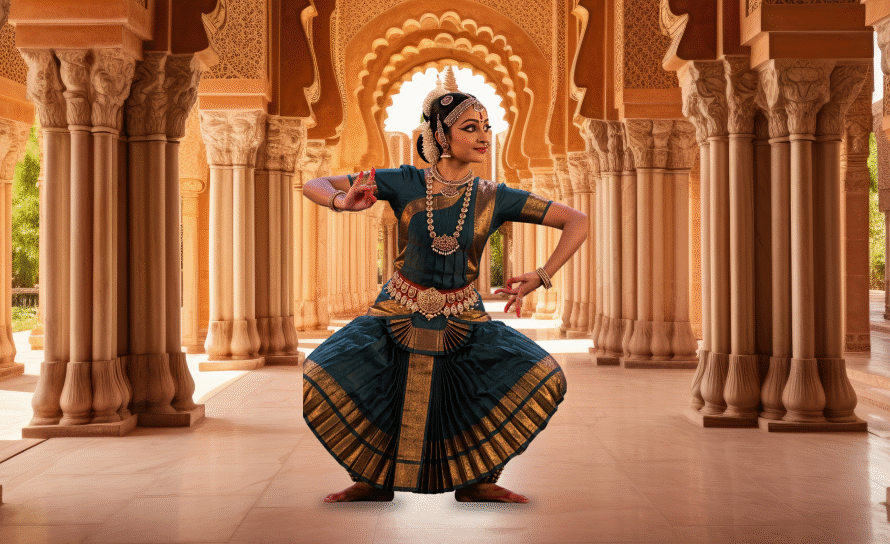
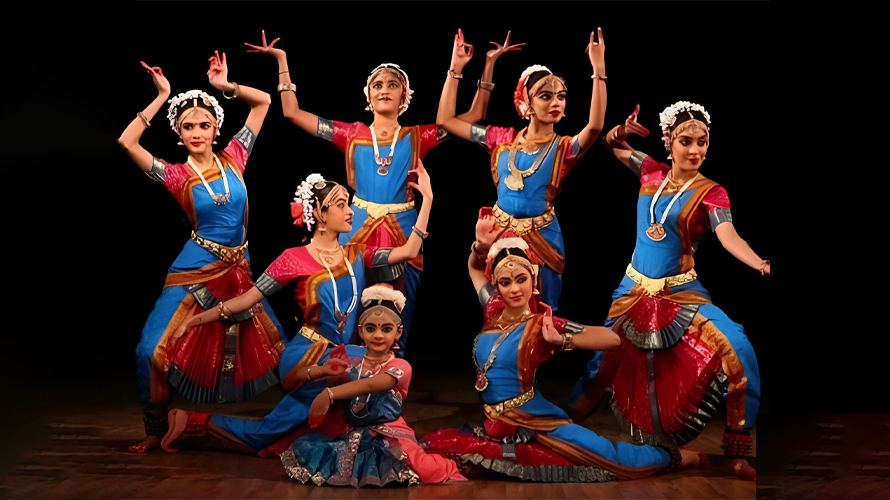
How Are Hair, Makeup and Ornaments Used to Enhance Facial Expressions in Kuchipudi?
Facial expressions or Bhavas play a central role in communicating emotion and narrative in every performance. Hair, makeup and ornaments are not mere adornments, they are essential tools that help dancers project these emotions effectively to audiences, even in large theater spaces. The meticulous application of makeup, the careful styling of hair and the strategic use of traditional ornaments all work together to enhance the clarity, intensity and subtlety of each expression on stage.
In Classical Performances, these elements are carefully calibrated to maintain the authenticity of tradition while ensuring visibility and impact. Bold eye makeup, defined eyebrows and vivid lips emphasize facial movements, allowing spectators to perceive subtle emotions from a distance. Hair and ornaments complement these expressions by framing the face and accentuating gestures, giving the dancer a commanding presence.
Role of Traditional Makeup in Enhancing Expressions
Makeup in Kuchipudi serves as a bridge between the dancer’s emotions and the audience’s perception. Eye makeup, including thick eyeliner and extended eyebrow lines, draws attention to the dancer’s eye movements, which are central to conveying emotion. Lips are highlighted with bright colors to ensure expressions are visible even under stage lights, while subtle cheek coloring adds definition to facial contours. Makeup also varies depending on the narrative. For intense or dramatic scenes, colors may be bolder, highlighting tension and energy, while softer tones accompany devotional or gentle sequences. This careful modulation allows the dancer to communicate emotion without distraction. Through these methods, it is clear how makeup enhances facial expressions in Kuchipudi performances while respecting classical aesthetics.
Hair Styling and Its Impact on Performance
Hair is more than just a visual complement, it is an integral part of expression in Kuchipudi. Female dancers traditionally style their hair into elaborate braids or buns, often adorned with flowers and jewelry, creating a graceful frame for the face. Male performers use tied or stylized hair that maintains a dignified stage presence. These hair arrangements ensure that the focus remains on facial movements and gestures. Movement of hair can also accentuate rhythm and energy during dance sequences. A swaying braid or a well-positioned hair accessory can amplify gestures, drawing attention to head movements that are part of storytelling. Through deliberate styling, dancers ensure that hair not only supports but also enhances the projection of emotion, maintaining a harmonious balance between aesthetics and expression.
Ornaments and Jewelry as Expression Tools
Ornaments in Kuchipudi are carefully chosen to complement facial expressions and gestures. Headpieces, earrings, necklaces and other jewelry pieces help highlight key facial features, framing the eyes, cheeks and jawline to make expressions more pronounced. Jewelry also interacts with lighting on stage, reflecting light to draw attention to the face and upper body, reinforcing the storytelling. Traditional ornaments are more than decorative, they carry cultural and symbolic significance. Each piece adds rhythm and visual interest to the performance, subtly guiding the audience’s gaze toward the dancer’s face and movements. When coordinated with makeup and hair, ornaments create a cohesive visual language that enhances every emotional nuance of the performance.
Integrating Makeup, Hair and Ornaments for Stage Presence
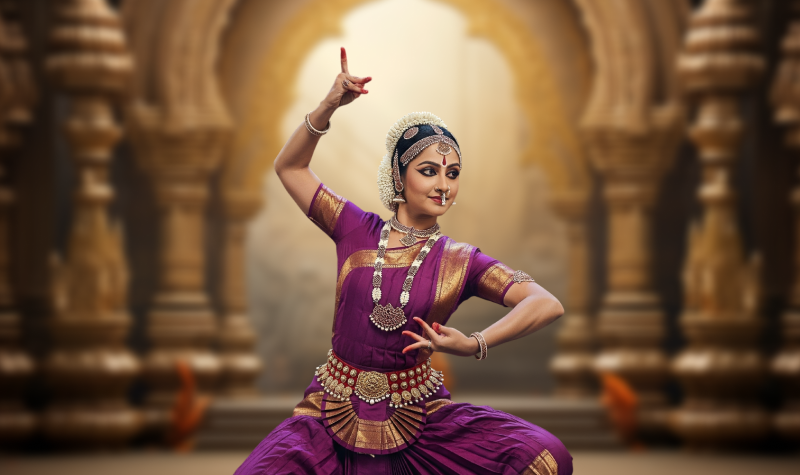
A successful Kuchipudi performance depends on the seamless integration of hair, makeup and ornaments. Dancers carefully combine these elements to create a stage presence that amplifies their expressions and storytelling. Adjustments are made depending on the size of the venue and the distance of the audience, ensuring that every subtle eyebrow raise or eye movement is visible. The coordination of these elements is critical for maintaining the balance between tradition and performance clarity. In modern theater settings, stage lighting and camera angles can alter how expressions are perceived. By harmonizing makeup, hair and ornaments with the dancer’s movements and costume, performers can maintain authenticity while adapting to contemporary performance conditions. This approach demonstrates how classical traditions are preserved while effectively engaging modern audiences.
Conclusion
The use of hair, makeup and ornaments in Kuchipudi demonstrates how these elements are central to enhancing facial expressions and storytelling. By emphasizing eyes, lips and facial contours, styling hair strategically and carefully selecting traditional jewelry, dancers create a vivid and expressive performance that resonates with audiences. This thoughtful integration ensures that even the subtlest emotion is communicated with clarity and intensity. Institutions like Nrityangana continue to nurture these traditional practices, training dancers to master these techniques while preserving the authenticity and elegance of Kuchipudi. Through dedication and expertise, the timeless beauty of this art form continues to captivate audiences across generations.
FAQ's
How does makeup enhance facial expressions in Kuchipudi dance?
Makeup in Kuchipudi highlights the dancer’s eyes, eyebrows, lips and cheeks, making subtle emotions visible even at a distance. Eye lines emphasize gaze, lips ensure expressions are perceptible and cheek contouring adds depth to the face.
What role do hair and hair accessories play in Kuchipudi performances?
Hair and hair accessories frame the dancer’s face and enhance the projection of head movements. Elaborate braids, buns and flowers for female dancers or styled hair for male dancers ensure gestures are highlighted. Movement of hair during dance sequences adds rhythm and elegance, supporting the visual storytelling and enhancing the clarity of facial expressions.
How are ornaments used to highlight expressions in Kuchipudi?
Ornaments like earrings, headpieces and necklaces accentuate facial features, reflecting stage lights to draw attention to expressions. They add rhythm and cultural symbolism, complementing gestures and supporting the narrative. When combined with makeup and hair, ornaments help project Bhavas clearly, ensuring the audience experiences the intended emotion effectively.