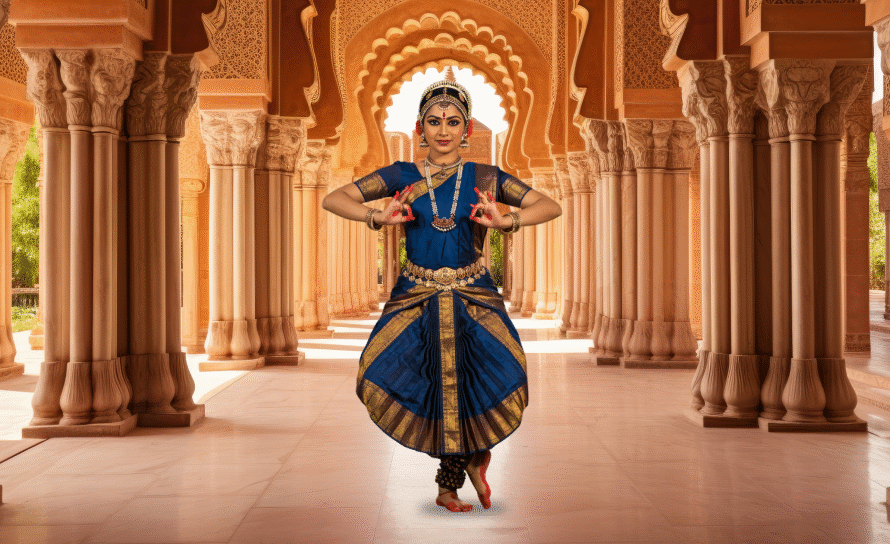
What Are the Core Elements of Kuchipudi?
Kuchipudi is one of India’s most expressive classical dance forms, known for its graceful movements, strong storytelling and rhythmic brilliance. Understanding the core elements of Kuchipudi helps dancers and learners appreciate its structure, depth and artistic discipline. Each element works together to create a balanced performance that blends technique with emotion, making Kuchipudi both visually captivating and culturally rich.
Nritta: The Foundation of Pure Dance
Nritta represents pure dance movements in Kuchipudi, focusing on rhythm, speed and precise footwork without conveying a specific story. This element builds a dancer’s technical strength and control, as every movement is aligned with tala and musical beats. Clear lines, balanced posture and coordinated steps create the visual harmony that forms the backbone of a Kuchipudi performance.
Nritya: Expression Through Movement
Nritya combines rhythm with expression, allowing dancers to communicate emotions and ideas through hand gestures, facial expressions and body language. In Kuchipudi, nritya plays a crucial role in connecting the audience to the theme of the performance. The clarity of gestures and subtle expressions helps transform movements into meaningful storytelling, making the dance engaging and emotionally resonant.
Natya: The Dramatic Essence
Natya brings the theatrical dimension to Kuchipudi, rooted in dance dramas and character portrayal. This element emphasizes acting, narrative flow and emotional depth. Through natya, dancers depict mythological stories and characters, using expressive techniques that go beyond movement alone. The dramatic aspect gives Kuchipudi its distinctive identity as both a dance and a storytelling art form.
Abhinaya, Music and Presentation

Abhinaya is often considered the soul of Kuchipudi, as it conveys rasa through facial expressions, eye movements and subtle gestures. Alongside abhinaya, Carnatic music, traditional costumes and stage presence enhance the overall impact of the performance. The seamless coordination between music, movement and expression creates a complete artistic experience that defines the elegance of Kuchipudi.
Conclusion
The core elements of Kuchipudi-nritta, nritya, natya and abhinaya-work together to form a dance style that is technically strong and emotionally expressive. Learning these elements helps dancers build a solid foundation and perform with confidence and clarity. Dance academies like Nrityangana focus on structured training in these core aspects, guiding students to understand not just the steps, but the true essence of Kuchipudi.
FAQ's
What are the main elements of Kuchipudi dance?
Nritta, Nritya, Natya and Abhinaya are the core elements of Kuchipudi.
Why is abhinaya important in Kuchipudi?
Abhinaya brings emotional depth and helps convey the story clearly to the audience.
How is Kuchipudi different from other classical dances?
Kuchipudi uniquely blends graceful movement with strong dramatic expression and dance drama roots.
Can beginners learn Kuchipudi easily?
Yes, with proper guidance and consistent practice, beginners can learn Kuchipudi step by step.