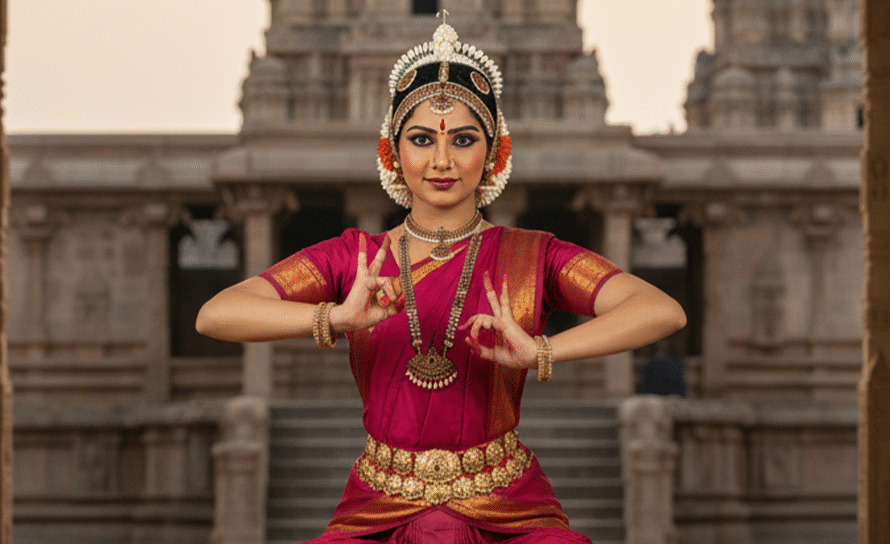
What Are Common Challenges Students Face in Learning Tarangam or Abhinaya?
Tarangam and Abhinaya are two of the most demanding yet rewarding aspects of Classical Dance training. While both are visually captivating on stage, students often underestimate the depth of physical control, emotional maturity and mental focus required to master them. Many learners, especially beginners, struggle not because of lack of talent but due to the unique challenges these forms present. Understanding these difficulties early helps students, parents and teachers set realistic expectations and build a stronger learning foundation.
Challenges Faced by Students in Learning Tarangam
One of the most common challenges students face in learning Tarangam is maintaining balance and stability while dancing on a brass plate. Unlike regular footwork, Tarangam demands precise weight distribution, ankle strength and body alignment. Even a slight imbalance can affect rhythm and confidence, making students hesitant in their movements. Beginners often find it difficult to coordinate complex steps while keeping the plate steady, which leads to stiffness and fear during practice.
Another major difficulty in Tarangam is rhythm control. Students must synchronize their movements with the music while also managing the added complexity of the plate. This multitasking can feel overwhelming, especially during early training stages. Performance anxiety further intensifies the challenge, as many students fear slipping or losing control on stage. This fear directly impacts confidence, causing hesitation and reduced expressiveness during performances.
Common Difficulties Students Face in Learning Abhinaya
Abhinaya presents a completely different set of challenges, as it focuses more on emotional expression than physical technique. One of the biggest difficulties students face in learning Abhinaya is conveying emotions naturally through facial expressions, eye movements and subtle gestures. Many beginners struggle with stiffness or overexpression, making their performance appear forced rather than authentic.
Understanding the meaning behind lyrics, emotions and characters is another hurdle. Abhinaya is deeply rooted in storytelling and without emotional connection, expressions lose their impact. Students often find it hard to internalize bhava and rasa, especially when they focus more on memorizing movements than feeling the emotion. Coordinating eyes, face, hands and body simultaneously also takes time, patience and consistent guidance, making Abhinaya one of the most mentally demanding aspects of classical dance.
Why Beginners Struggle More With Tarangam and Abhinaya
Beginners often struggle more with Tarangam and Abhinaya because both require a strong foundation that develops gradually. In Tarangam, insufficient core strength, limited ankle flexibility and lack of rhythmic awareness can slow progress. In Abhinaya, emotional maturity and observation skills play a major role, which develop with age, experience and exposure to performances.Another reason students struggle is impatience. Many learners expect quick results and feel discouraged when progress seems slow. Tarangam and Abhinaya demand repetition, internalization and mental focus. Without consistent practice and constructive feedback, students may feel stuck, leading to frustration and self-doubt. Recognizing that these struggles are part of the learning journey helps students stay motivated and committed.
How Students Can Overcome Tarangam and Abhinaya Learning Challenges

Overcoming Tarangam and Abhinaya learning challenges requires a balanced approach that combines physical training, emotional awareness and mental discipline. In Tarangam, gradual practice focusing on balance, rhythm and controlled movements helps build confidence. Slow repetition and guided correction allow students to overcome fear and develop stability over time. For Abhinaya, observation and emotional connection are key. Watching senior dancers, understanding stories deeply and practicing expressions in front of a mirror can significantly improve expressiveness. Consistent guidance from experienced teachers helps students refine subtle details and avoid common mistakes. Most importantly, patience and self-belief play a crucial role in mastering both Tarangam and Abhinaya.
Conclusion
Learning Tarangam and Abhinaya is a journey filled with challenges, growth and self-discovery. While balance issues, rhythm problems, emotional expression and coordination difficulties are common, they are also stepping stones toward mastery. With the right guidance, consistent practice and a supportive learning environment, students can overcome these challenges and evolve into confident performers. At Nrityangana, students are nurtured with structured training, personalized attention and a deep respect for tradition, helping them transform challenges into artistic strength.
FAQ's
What challenges do students face in learning Tarangam?
Students commonly face balance issues, rhythm coordination problems and fear of performing on a brass plate. These challenges are more prominent among beginners but improve with consistent practice and proper guidance.
Why do students struggle with Abhinaya expressions?
Many students struggle with Abhinaya because it requires emotional depth, facial control and understanding of storytelling. Without internalizing the emotion, expressions may appear stiff or exaggerated.
Is Tarangam difficult for beginners to learn?
Yes, Tarangam can be challenging for beginners due to balance, coordination and performance anxiety. However, gradual training and strength development make it manageable over time.
How long does it take to master Abhinaya?
Mastering Abhinaya is a continuous process rather than a fixed timeline. With regular practice, observation and guidance, students gradually develop expressive maturity and confidence.